
CXO’s –
For every dollar you spend acquiring a new customer, how many dollars does that customer actually return to your business over their lifetime?
If you don’t know this number – or worse, if it’s less than three – you’re not building a growth engine. You’re building an expensive treadmill.
The Growth Paradox Nobody Talks About
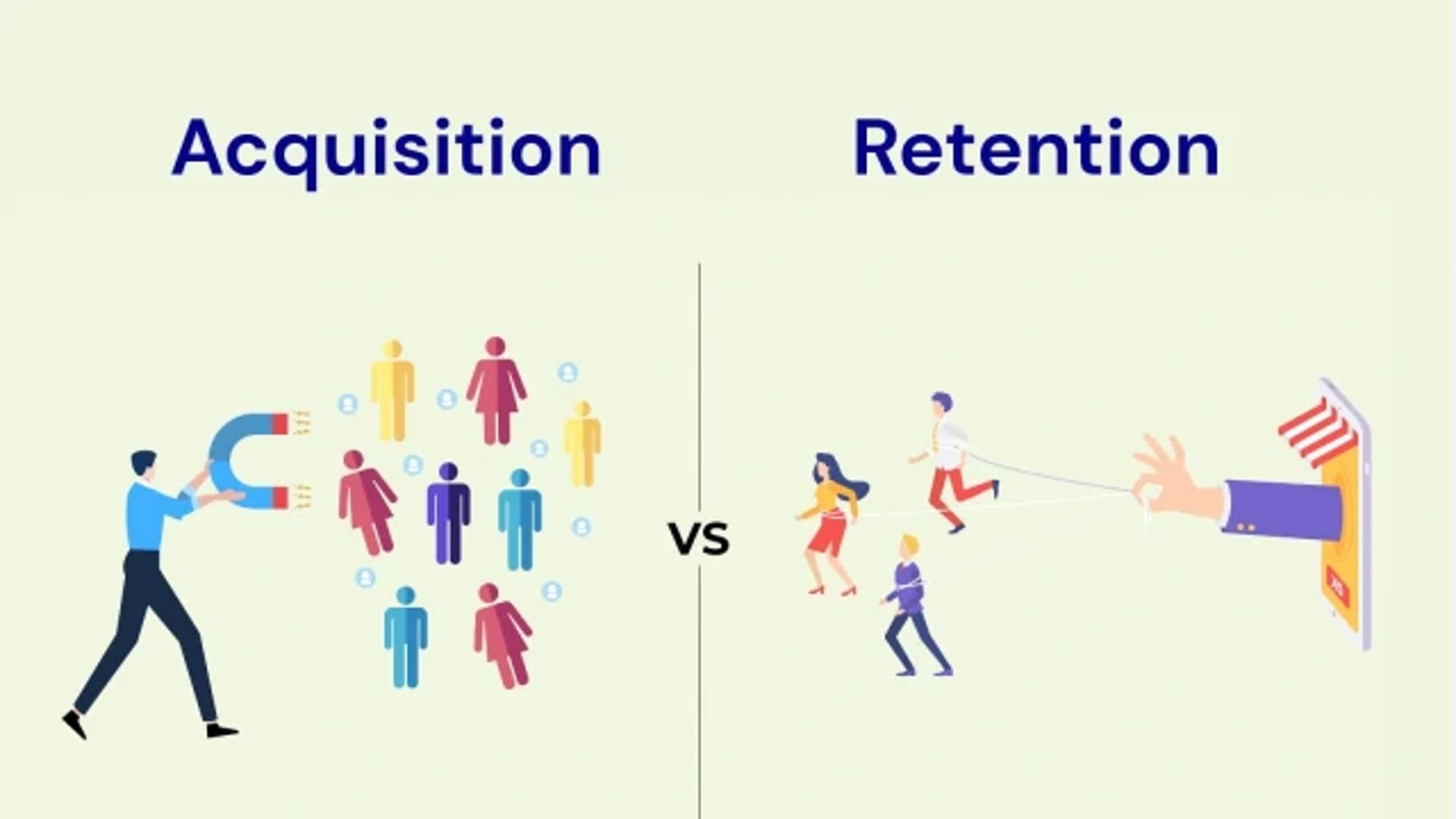
Here’s the uncomfortable math most growth-stage companies ignore: It costs 5-7x more to acquire a new customer than to retain an existing one. And customer acquisition costs have surged by over 200% in the last five years.
That means if you’re spending a dollar to acquire a customer, you’re effectively spending 5-7 cents to keep one. Yet most companies pour 80% of their marketing budget into acquisition and wonder why profitability remains elusive.
This isn’t a marketing problem. It’s a capital allocation failure.
According to Bain & Company, increasing customer retention rates by just 5% can boost profits by 25% to 95%. That’s not incremental improvement. That’s a fundamental shift in your business economics.
What Poor Retention Actually Costs You
Your valuation. The LTV:CAC ratio – lifetime value divided by acquisition cost – is the metric investors scrutinize most. The industry standard for healthy growth is 3:1. But here’s what most CEOs miss: LTV is almost entirely determined by retention. You can’t fix this ratio by spending less on acquisition. You fix it by keeping customers longer.
Your growth runway. Top-performing B2B companies hit Net Revenue Retention (NRR) above 120%, meaning they grow 20% annually from existing customers alone, before adding a single new logo. Meanwhile, companies below 100% NRR are running just to stand still. Every churned dollar has to be replaced before you can grow.
Your cost structure. When customers leave, you have to replace them. But acquisition channels don’t get cheaper. They get more expensive. That’s not a growth model. That’s a death spiral.
Your reputation. High churn doesn’t stay quiet. It shows up in online reviews, in competitor sales pitches, and in the whisper network of your industry’s slack channel. One negative review may cost you at least 30 potential customers.
Why CEOs Keep Pouring Money Into Acquisition Anyway
Because acquisition is visible. It’s exciting. It has dashboards that look like progress.
Retention is invisible until it’s catastrophic. There’s no champagne toast when a customer quietly renews.
But 82% of business leaders agree retention is more cost-effective than acquisition. Yet 44% of companies still prioritize acquisition spending.
That’s not a strategy gap. That’s a discipline gap.
Four Questions to Ask Your Team This Week
If retention isn’t a standing topic in your leadership meetings, start here:
1. “What’s our NRR, and how does it trend by customer segment?”
Top B2B companies hit 115-120% NRR. If yours is below 100%, you’re shrinking from existing customers before you even count churn. And blended numbers hide the real story. Segment by industry and acquisition channel. You’ll likely find one or two segments bleeding revenue while others are solid.
2. “Where does our brand promise break down in actual customer experience?”
73% of buyers say experience drives their decisions, but fewer than half of companies have actually mapped their customer journey. If marketing promises seamless implementation and customers experience a six-month slog, churn is inevitable. The gap between promise and delivery is where retention dies.
3. “Can we predict which customers are about to leave, BEFORE they tell us?”
Companies using health scoring and usage data see retention higher rates than those flying blind. If your first signal of churn is a cancellation notice, you’ve already lost. The question isn’t whether you have the data, it’s whether anyone’s watching it.
4. “How is our team compensated around retention?”
If sales gets paid on new logos and customer success gets blamed for churn, you’ve built a system that produces churn. Highly aligned organizations, where retention is a shared metric across sales, success, marketing and product, grow revenue faster and are more profitable.
“Retention isn’t a marketing fix. It’s a financial lever that can make or break growth.”
The Bottom Line
You cannot outspend a retention problem. Every dollar invested in acquiring customers who churn is a dollar that never compounds. Every percentage point of retention you gain multiplies the value of every acquisition dollar you’ve ever spent.
The companies that break through the mid-market growth cliff aren’t the ones with the biggest acquisition budgets. They’re the ones who’ve figured out how to keep customers long enough for the math to work.
So, here’s my challenge to you: Before you approve the next campaign, the next headcount, the next growth investment, calculate what it’s actually worth if your retention rate stays where it is today.
Then fix the retention rate first.
Need Help Finding Your Company’s Growth Leaks?
At Britton Parris Marketing & Communications, our GrowthCore360™ diagnostic uncovers the gaps that are silently draining your growth, retention, and compounding your acquisition costs. Let’s talk: Calendar.