
Every week, another headline.
Thousands of roles eliminated, with AI cited as the reason. And the message filtering down to CEOs everywhere is the same: automate faster, cut deeper, show the market you are serious about efficiency.
If you are a CEO, you are either already under pressure to make similar cuts, or you are watching your peers do it and wondering if you are falling behind.
I want to offer you a different question to sit with before you make that call.
Not “how many roles can AI replace?” But: “which human touchpoints are actually holding my revenue together – and what happens to growth if I remove them?”
In B2B, those are not the same questions. And conflating them is quietly becoming one of the most expensive decisions a CEO can make.
Now, let me ask you another question –
When you look at your AI roadmap, how much of it is designed to cut cost – versus elevate the customer experience?
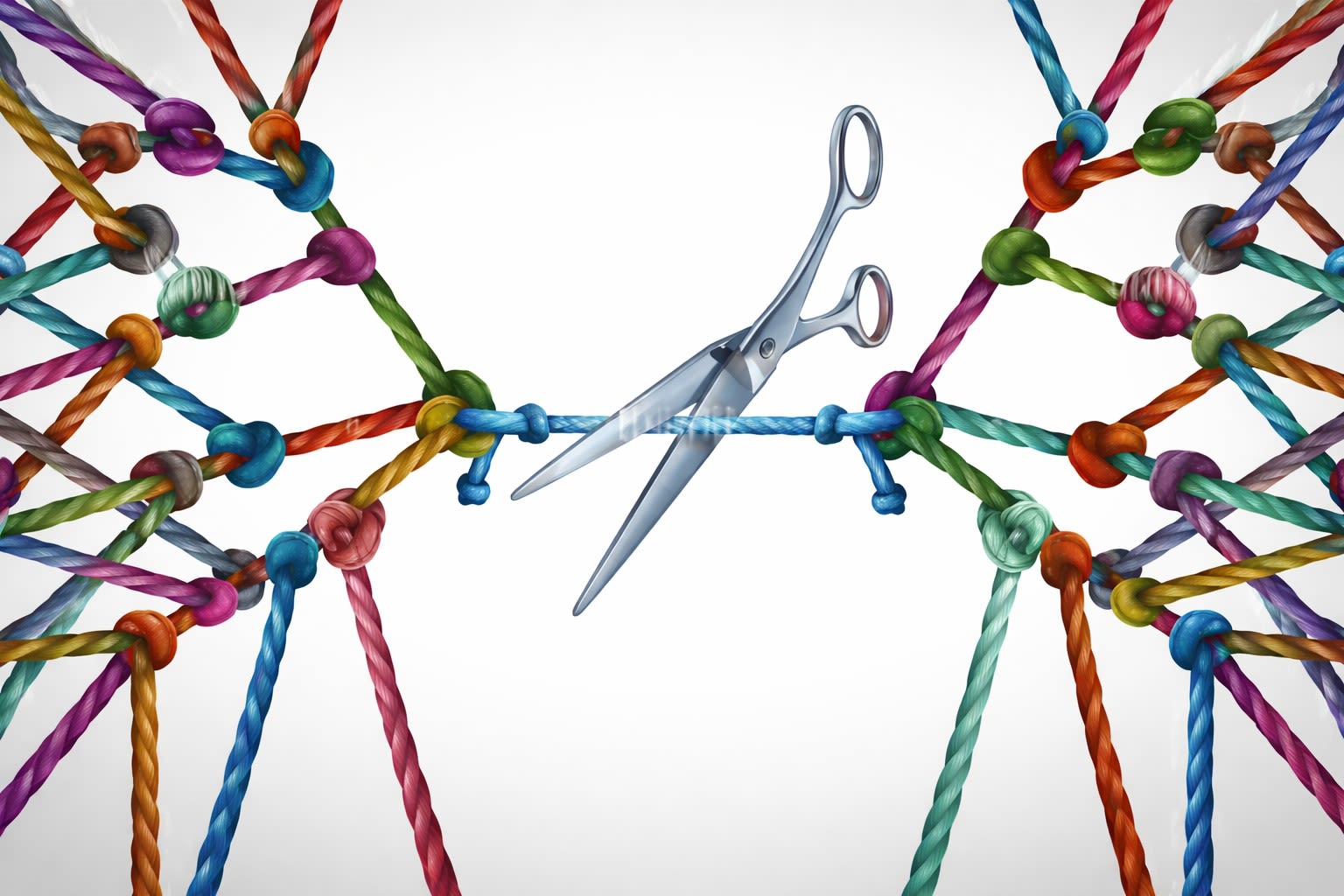
If you had to pause, that hesitation is telling you something. Because right now, most companies are making the same mistake. They are using AI to optimize efficiency and reduce headcount – while unintentionally degrading the very thing that drives B2B growth: the customer relationship.
And in B2B, the relationship is the revenue.
The Paradox Nobody Is Talking About
The faster AI accelerates, the more valuable genuine human connection becomes.
Every company now has access to the same AI tools. The same chatbots. The same automation platforms. The same LLMs. And when everyone has access to the same technology, technology alone is no longer a differentiator.
Instead, the customer experience a company delivers is. And experience, at its highest value moments, still requires humans in the loop. FULL STOP!
I understand the pressure is real. Boards want to see AI efficiency. Investors want margin expansion. But there is a critical difference between deploying AI intelligently and using AI as a cost-cutting justification that happens to come with good optics.
The question is never whether to use AI. Instead, the question is what you are using it to do – amplify your people, or replace the moments that only your people can deliver.
B2B Is Especially Vulnerable. Here’s Why.
In B2C, friction costs you a transaction. In B2B, it costs you trust.
In B2C, customers make quick, relatively low-stakes decisions. Friction costs you a sale.
In B2B, you are asking someone to sign a multi-year contract, stake their professional reputation on a vendor decision, and align multiple stakeholders behind a purchase. The emotional and relational stakes are completely different – especially when the typical B2B purchase has a median value of $200K–$300K.
75% of B2B buyers will prefer experiences that prioritize human interaction over AI by 2030, even as AI tools become more sophisticated and widespread. – Gartner, 2025
We Are Biologically Wired for Human Connection
When COVID removed human connection, we became anxious, disengaged, and starved for something we could not name.
Mental health crises spiked globally. Loneliness was a public health emergency. Employee engagement collapsed. And the moment restrictions lifted, revenge travel spiked, and people were “outside” again.
Your customers are wired the same way. And in B2B, where the stakes of every relationship are measured in six and seven figures, that’s not just a biological reality. It’s a commercial one.
The 10 Unintended Consequences of AI-first Strategies on Customer Experience
Here is what actually happens when AI replaces the human touchpoints in a B2B relationship.
1. Churn you don’t see coming – AI handles the touchpoints. No one notices the relationship quietly cooling. By the time the renewal conversation happens, the client has already made their decision. You didn’t get a warning because there was no human paying attention closely enough to catch it.
2. You win fewer deals at the close – The buying journey looks fine on paper – leads are coming in, demos are happening – but conversion drops. Why? Because by the time a human finally shows up in the process, there’s no relationship to close on. Trust wasn’t built. It was assumed.
3. Your brand becomes indistinguishable – When AI generates your messaging, your content, and your outreach, it pulls from the same data everyone else’s AI is pulling from. You start to sound like your competitors. AI-first strategies accelerate that problem.
4. You attract the wrong customers – Automated outreach optimizes for volume and conversion signals, not necessarily fit. You end up with clients whose expectations don’t match what you actually deliver. Churn follows. And those clients often leave loudly.
5. Your best people leave quietly – When humans are removed from meaningful work and reduced to managing automation outputs, the ones with options go somewhere they feel useful. You lose institutional knowledge, relationship equity, and judgment – all at once – and replace it with a tool that doesn’t know what it doesn’t know.
6. Your onboarding breaks and you don’t realize it – Automated onboarding feels efficient. But B2B clients who don’t feel held during the first 90 days don’t complain, they just don’t renew. And by the time the data shows the pattern, you’ve lost a year of revenue.
7. Crisis hits and you have no credibility to spend – When something goes wrong (it always does) you have no relationship equity in the bank. The client doesn’t have a human they trust on the other side. An automated response in that moment doesn’t just fail to help. It accelerates the exit.
8. You create a race to the bottom on price – When experience is indistinguishable, buyers default to price. Your differentiation disappears. And once you’re competing on cost, margin compression follows. AI-first strategies intended to improve efficiency end up destroying pricing power.
9. Your referral engine dries up – A lot of B2B growth runs on referrals and reputation. Those typically come from humans who had a remarkable experience with other humans. Automated journeys produce satisfied customers at best. They rarely produce advocates.
10. You measure the wrong things and declare victory – Response times improve. Ticket volumes drop. Cost per interaction falls. Every efficiency metric looks great. Meanwhile, renewal rates are quietly declining, and expansion revenue has stalled. You optimized the metrics that are easy to see and missed the ones that actually matter.
The Formula: AI Handles Volume. Humans Handle Moments that Matter.
Again, this is not a debate between AI and humans. It is a design challenge. And the CEOs getting it right are not choosing one over the other. They are being deliberate about where each belongs.
The question is not where you can remove humans from the customer and brand experience. The question is where removing them would quietly cost you revenue, reputation, or relationships you can’t easily rebuild.
So here is my challenge to you. Before you make your next AI-driven headcount decision, ask your team three questions:
1. Which customer touchpoints have we automated in the last 24 months – and what happened to retention and satisfaction scores in those segments afterward?
2. Which of our highest-value buyer interactions still have a human in the loop – and which ones quietly lost one?
3. For every marketing or CX role we are considering eliminating, what does that person produce that AI cannot – positioning decisions, client relationships, judgment calls, internal alignment?
The Bottom Line
AI is a multiplier. But you have to have something worth multiplying.
That something is the quality of your people, the depth of your customer relationships, the sharpness of human judgment, and the alignment between what your brand promises and what your teams actually deliver.
Every headline pushing you to cut humans from your growth engine is optimizing for the wrong metric. Efficiency without connection is just a faster way to lose customers.
Invest in your humans. Equip them. Deploy them at the moments that matter. Use AI to give them superpowers. And stop treating customer experience like an overhead line item, because in the era of AI acceleration, human connection is the only competitive moat that cannot be copied with a prompt.
Is Your Company Cutting Costs and Cutting Meaningful Customer Connections?
At Britton Parris Marketing + Communications, we help growth-minded B2B companies bridge the gap between brand promise and customer experience — aligning people, processes, and strategy to drive measurable growth.
Our proprietary GrowthCore360™ diagnostic uncovers the alignment gaps that are silently draining your growth potential. Let’s connect and discuss yours.