

Your Due Diligence Checklist: How to Ensure a Smooth Transition During Your M&A
Woohoo! Congratulations. A prospective buyer is interested in acquiring your business! But hang tight, because that’s just the beginning. Do you have your due diligence checklist ready?
The M&A process is an exciting but lengthy one. It can last anywhere from months to years depending on the size of the company involved in said transaction.
A large portion of this time, in fact, is dedicated to conducting due diligence. Here, we’ll give you a guide that ensures your M&A due diligence runs as smoothly as possible.
Let’s start with the basics.
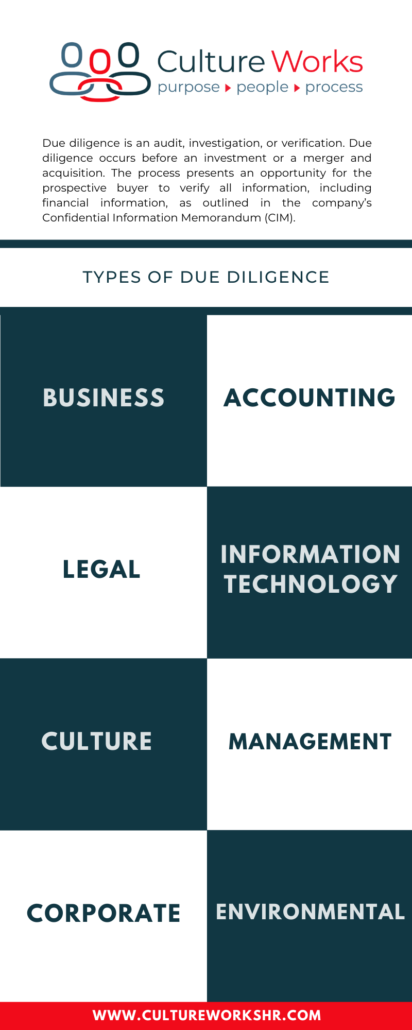
What is Due Diligence?
Due diligence is referred to as an audit, investigation, or verification. Due diligence occurs before a potential investment or before a merger and acquisition. The process presents an opportunity for the prospective buyer to verify all information, including financial information, as outlined in the company’s Confidential Information Memorandum (CIM).
Although due diligence reveals whether or not the deal is priced fairly, it also provides a comprehensive overview of the company and its obligations. This might include, as Business Benefits Group explains, “debts, leases, distribution agreements, pending and potential lawsuits, long-term customer agreements, warranties, compensation agreements, employment contracts, and similar business components.”
This is all important information a prospective buyer might want to know before deciding to proceed with a transaction.
Additional information that is revealed during due diligence includes information regarding the company’s business model: How does the company conduct business? Who are its competitors? What are its employee relationships like? What vendor relationships does it maintain? How does the company work with customers?
Do Your Due Diligence As It’s Due
Due diligence is important for a number of reasons—and for both parties!
From a prospective buyer’s perspective, due diligence keeps them safe. Having gone through an extensive investigation into the company, they should feel more comfortable entering the transaction. Properly conducted due diligence limits the risk factor for issues of finance and legality.
Due diligence helps prospective buyers make informed decisions. Additionally, it gives them access to high-quality information about the potential transaction. Oftentimes, the information that is revealed during due diligence—whether it be a merger or acquisition—directly influences the buyer’s decision to move forward with the transaction or not.
In this case, it is extremely important for all financial information to be truthfully and correctly disclosed during this period, as it is such an influential factor.
Although the benefits might not be as clear, there are potential upsides of due diligence from a seller’s perspective as well. Going through an extensive financial audit might bring to light the fact that their company is worth more than expected. This being considered, many sellers conduct their own due diligence prior to the sale of their business. This way, they avoid surprises during the actual process.
Due diligence must be completed prior to the close of a transaction, so both parties fully understand what they are receiving out of the transaction and the responsibilities that come with it.
Although it is an extensive process, that depends on the size of the company, due diligence provides an opportunity for the two involved parties to form a trusting and communicative relationship. In the case of a merger, this process is especially integral to the ongoing success of the merged companies.
Without due diligence, it is unlikely that a business transaction will come to fruition.
Sellers, Don’t Take the Easy Way Out
It’s hard. Of course, as sellers, you want your company, product, or whatever is involved in the transaction to look perfect. But the reality is, nothing is.
Because of this, it can be tempting to gloss over any negative information.
Here at Culture Works, however, we’re here to tell you that absolutely everything will come out during the due diligence process. So, it’s better to get ahead of the game and disclose any dirty little secret before the prospective buyer finds out themselves.
Bonus points! You will come off as a stand-up and honest person to do business with.
Additionally, addressing underlying issues ahead of time will also give you sufficient time to create any workable solutions necessary. And if the prospective buyer is no longer interested? At least you’ve addressed and polished that problem in the meantime to increase the value of your company for the future.
Your Due Diligence Checklist
When it comes to due diligence, there is no “one size fits all” process. The checklist will vary from company to company. There are, however, some key elements that most due diligence processes share.
The Team
The first step in the due diligence process is to rally up your team who will be conducting the process. For best results, you will need to have a team of both financial and legal advisors who have specific expertise in M&A.
Typically, this team includes—but is not limited to—lawyers, investors, accountants, and/or personal consultants.
Why?
The prospective buyer will want to know why—why is this company looking to sell? Have there been previous efforts to sell? The overall “why” in due diligence should also assess the company’s business model and any long-term goals or strategy they might have in place.
Business Due Diligence Checklist
All mergers and acquisitions will need to conduct business due diligence. This branch of due diligence investigates the company’s current finances (i.e. revenue, cash flow) and its long-term sustainability. Business due diligence predicts if the company has the potential to grow. In addition, it includes a market analysis of the company’s target demographic and current consumers.
Culture Due Diligence Checklist
Buyers need to know what a company will look like in a year, two years, or five years after acquisition. In the case of a company built on a “cult of personality”, the departure of a dynamic CEO might be the downfall of the company. If you are looking to sell in the next three to five years, doing a culture initiative to optimize the leadership and autonomy of the middle management can significantly increase your valuation.
In the case of a merger, the likelihood of a seamless culture merge is very low without intentional initiatives to integrate the acquiring company with the acquired one. Having a team in place to shepherd that integration significantly increases the probability of success of the merged company culture.
Accounting Due Diligence Checklist
Accounting due diligence verifies all financial information the seller has provided is correct and true. This, for the seller, is probably the most time-consuming as you’ll be asked to provide various documents and information.
Legal Due Diligence Checklist
During the legal portion of due diligence, a team of lawyers will look at any contracts or leases you hold to identify potential liabilities.
IT (Information Technology) Due Diligence Checklist
This portion of due diligence will vary depending on your business’s industry. IT specialists will evaluate your current IT resources and potential issues.
Technology Due Diligence Checklist
Here, a team will investigate your company’s technological resources. In addition, your patents will be assessed.
Environmental Due Diligence Checklist
For some companies, environmental due diligence will be more time-consuming than others. This assessment, however, will be spent analyzing any potential environmental risks that might be in your court after acquiring said company.
Other Potential Fields of Due Diligence
- Corporate (i.e. records and documents)
- Management
- Marketing and Sales
- Taxes
- Production Capability
- Cybersecurity
- Litigation
- Property
- Insurance
We’re Your M&A Experts
The merger and acquisition process is a hefty one. The length and complexity of these transactions vary based on a number of factors. And as we can see, it involves a large amount of communication between various parties.
Although challenging, due diligence isn’t a process to be skipped over or simply check off your to-do list. Due diligence is a crucial evaluation process used by a prospective buyer to clarify the risks and obligations in a potential transaction. Without proper due diligence, both parties could end up in muddy water.
At Culture Works, we’re here to make sure this doesn’t happen. We understand what it takes to conduct proper due diligence, and our human resources experts are happy to help! Reach out to us today to see how we can help ease your M&A process.
The post Your Due Diligence Checklist: How to Ensure a Smooth Transition During Your M&A appeared first on Culture Works.