

Understanding the rights of disabled workers is essential for creating an inclusive and equitable workplace. The protections afforded to employees with disabilities have evolved significantly since the passage of the Americans with Disabilities Act in 1990, and these safeguards continue to strengthen workplace fairness across the United States. Whether you’re an employee seeking to understand your entitlements or an employer aiming to maintain compliance, knowing the comprehensive framework of disability rights in employment settings is crucial for fostering environments where all workers can thrive.
Legal Foundation for Workplace Disability Rights
The Americans with Disabilities Act (ADA) serves as the cornerstone legislation protecting the rights of disabled workers in the United States. This federal law prohibits discrimination against qualified individuals with disabilities in all aspects of employment, including hiring, advancement, compensation, training, and termination.
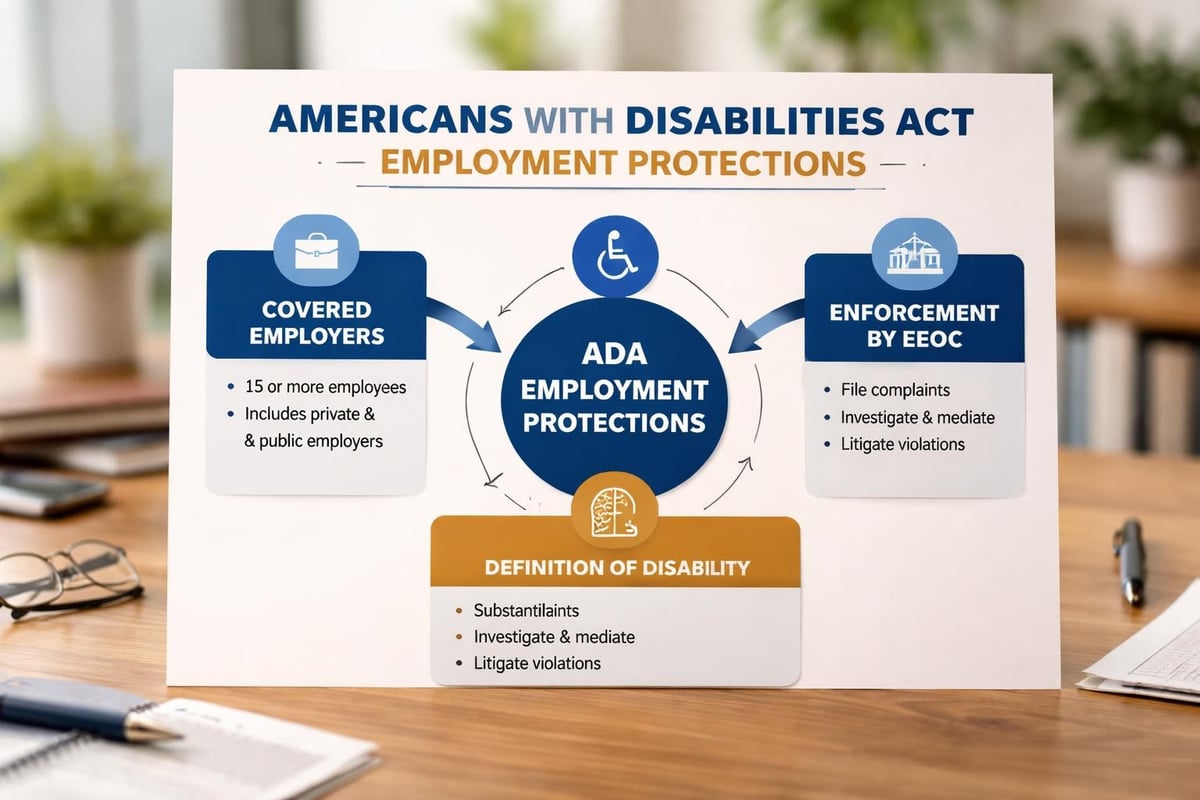
The ADA applies to employers with 15 or more employees, covering private employers, state and local governments, employment agencies, and labor unions. The law defines disability as a physical or mental impairment that substantially limits one or more major life activities, a record of such an impairment, or being regarded as having such an impairment.
Coverage Under Federal Law
Beyond the ADA, several other federal statutes reinforce the rights of disabled workers. The Rehabilitation Act of 1973 applies specifically to federal employees, federal contractors, and organizations receiving federal funding. Section 503 of this act requires affirmative action and prohibits discrimination in employment, while Section 504 extends these protections more broadly.
The Equal Employment Opportunity Commission (EEOC) enforces Title I of the ADA, which addresses employment discrimination. Workers who believe their rights have been violated can file discrimination charges with the EEOC, which investigates complaints and may pursue legal action on behalf of employees.
Understanding Reasonable Accommodations
One of the most significant aspects of the rights of disabled workers involves the concept of reasonable accommodations. Employers have a legal obligation to provide modifications or adjustments to the work environment or job duties that enable qualified individuals with disabilities to perform their essential functions.
Types of Reasonable Accommodations
Reasonable accommodations vary widely depending on the individual’s specific needs and the nature of the work:
- Physical modifications: Installing ramps, adjusting desk heights, providing specialized equipment, or modifying workspace layouts
- Schedule adjustments: Offering flexible work hours, part-time schedules, or telecommuting arrangements
- Policy modifications: Allowing service animals, permitting additional breaks, or modifying attendance policies
- Assistive technology: Providing screen readers, voice recognition software, amplified telephones, or adaptive keyboards
- Job restructuring: Reassigning marginal job functions, modifying training materials, or adjusting performance standards
The accommodation process begins when an employee requests an adjustment or when an employer becomes aware of a need. Employers and employees should engage in an interactive process to identify effective accommodations that don’t impose undue hardship on the business.
The Interactive Process
The interactive process represents a collaborative dialogue between employer and employee. Both parties share responsibility for maintaining open communication and working toward practical solutions.
Key steps include:
- The employee initiates the request or makes their needs known
- The employer acknowledges the request and gathers relevant information
- Both parties discuss potential accommodation options
- The employer evaluates the effectiveness and feasibility of each option
- Implementation occurs, with follow-up to assess success
Employers cannot simply deny accommodation requests without engaging in this good-faith dialogue. Documentation of the interactive process protects both parties and demonstrates compliance with legal requirements.
Protection Against Discrimination and Harassment
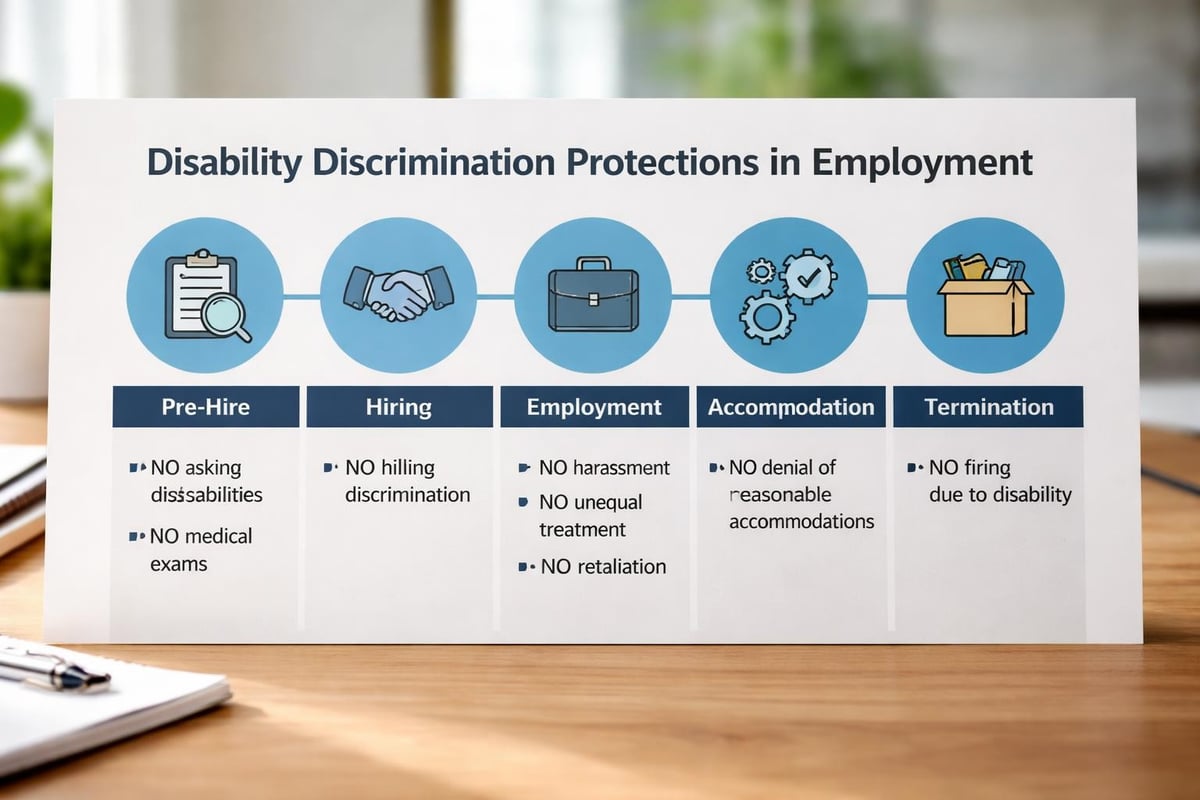
The rights of disabled workers extend far beyond accommodations to encompass comprehensive anti-discrimination protections throughout the employment lifecycle. Employers cannot make decisions based on disability in any aspect of employment.
Prohibited Actions
| Discrimination Type | Examples | Legal Protections |
|---|---|---|
| Hiring discrimination | Refusing to hire qualified candidates due to disability | ADA Title I |
| Promotion barriers | Denying advancement opportunities based on disability | ADA, Rehabilitation Act |
| Wage disparities | Paying disabled workers less for equivalent work | ADA, Equal Pay Act |
| Harassment | Creating hostile work environments through disability-related comments | ADA, Title VII principles |
| Retaliation | Punishing workers for asserting their rights | ADA anti-retaliation provisions |
Disability-based harassment creates particularly challenging situations. While the ADA doesn’t explicitly use the term “harassment,” courts have consistently recognized that severe or pervasive disability-related harassment can constitute discrimination by creating a hostile work environment.
Medical Examinations and Inquiries
Strict limitations govern when employers can make disability-related inquiries or require medical examinations. Before making a job offer, employers generally cannot ask about disabilities or require medical exams. After extending a conditional offer, employers may require exams if all entering employees in the same job category undergo similar screening.
Once employment begins, disability-related inquiries and medical examinations must be job-related and consistent with business necessity. Understanding these restrictions helps workers recognize when employers overstep legal boundaries.
Confidentiality and Privacy Rights
The rights of disabled workers include significant privacy protections regarding medical information. Employers must maintain medical records separately from personnel files and restrict access to this sensitive information.
Only specific individuals may access medical information about employees’ disabilities:
- Supervisors and managers who need to know about necessary work restrictions or accommodations
- First aid and safety personnel when emergency treatment might be necessary
- Government officials investigating ADA compliance
- Insurance companies requiring medical examinations
- Workers’ compensation offices or insurance carriers
Employers cannot disclose an employee’s disability status to coworkers without permission. When communicating about accommodations that might be visible to colleagues, employers should share only the minimum information necessary to implement the accommodation effectively.
State and Local Protections
Many states and municipalities provide protections for disabled workers that exceed federal requirements. These enhanced protections might include broader definitions of disability, coverage of smaller employers, or additional accommodation requirements.
Comparing Protection Levels
Workers should understand both federal and state-level rights, as they may claim protections under whichever law provides greater benefits. Some states, like Minnesota, offer particularly robust protections through their human rights acts, providing comprehensive accommodations for disabled employees.
California, for example, defines disability more broadly than the ADA and covers employers with five or more employees rather than fifteen. New York City’s Human Rights Law provides even more expansive protections, making it easier for workers to establish disability discrimination claims.
Enforcement and Filing Complaints
When the rights of disabled workers are violated, several enforcement mechanisms exist to seek redress. Understanding these processes empowers workers to protect their rights effectively.
Administrative Complaints
Step-by-step filing process:
- Contact the EEOC: Workers must file charges within 180 days of the discriminatory act (300 days in states with their own anti-discrimination agencies)
- EEOC investigation: The agency reviews the complaint, gathers evidence, and may attempt mediation
- EEOC determination: The agency issues a finding of reasonable cause or no reasonable cause
- Right to sue letter: If the EEOC doesn’t pursue the case, workers receive authorization to file private lawsuits
- Legal action: Workers can pursue claims in federal court with potential remedies including back pay, reinstatement, and compensatory damages
State and local agencies may offer parallel processes with different timelines and procedures. Resources from advocacy organizations provide additional guidance on navigating these systems effectively.

Undue Hardship Defense
While employers must provide reasonable accommodations, they can deny requests that would cause undue hardship. This defense has specific legal parameters that prevent employers from using it as a blanket excuse to avoid accommodations.
Factors Determining Undue Hardship
Courts consider multiple factors when evaluating whether an accommodation creates undue hardship:
- Nature and cost: The type of accommodation and its financial impact
- Employer resources: The overall financial resources of the business and the covered facility
- Business operations: How the accommodation affects operations, other employees, and the ability to conduct business
- Facility type: The geographic separateness and administrative or fiscal relationship of the facility to the employer
Small businesses have more flexibility in demonstrating undue hardship than large corporations with substantial resources. However, cost alone rarely justifies denying accommodations, particularly when external funding sources or tax credits offset expenses.
The employer bears the burden of proving undue hardship through concrete evidence, not speculation about potential difficulties or costs.
Rights During Leave and Return to Work
The rights of disabled workers intersect with various leave laws, creating a complex framework of protections when employees need time away from work for disability-related reasons.
FMLA and ADA Interaction
The Family and Medical Leave Act (FMLA) provides eligible employees with up to 12 weeks of unpaid, job-protected leave for serious health conditions. When disability-related conditions qualify as serious health conditions, workers may invoke both FMLA protections and ADA rights simultaneously.
| Aspect | FMLA | ADA |
|---|---|---|
| Leave duration | Up to 12 weeks | No specific limit (if reasonable) |
| Job protection | Same or equivalent position | Original position unless undue hardship |
| Employer coverage | 50+ employees | 15+ employees |
| Employee eligibility | 1,250 hours worked in past year | Qualified individual with disability |
Beyond FMLA exhaustion, extended leave may constitute a reasonable accommodation under the ADA if it enables the employee to perform essential functions upon return. Employers cannot have blanket policies automatically terminating employees who exhaust FMLA leave.
Return-to-Work Procedures
When disabled workers return from medical leave, employers must engage in the interactive process to determine necessary accommodations. Workers cannot be required to be 100% healed before returning; they need only be able to perform essential functions with or without reasonable accommodation.
Fitness-for-duty examinations must be job-related and consistent with business necessity. Employers cannot demand complete medical histories or diagnosis details beyond what’s necessary to evaluate whether the employee can safely perform their job.
Special Considerations for Different Disability Types
The rights of disabled workers apply across all disability categories, but practical implementation varies based on specific conditions and limitations.
Mental Health Conditions
Mental health disabilities receive the same legal protections as physical disabilities. Depression, anxiety disorders, PTSD, bipolar disorder, and other conditions qualify when they substantially limit major life activities.
Common accommodations for mental health conditions include:
- Quiet workspaces or noise-canceling headphones
- Flexible scheduling to attend therapy appointments
- Modified break schedules for stress management
- Temporary reduced workloads during acute episodes
- Clear, written instructions and regular feedback
Stigma surrounding mental health conditions sometimes prevents workers from asserting their rights. Federal resources emphasize that mental disabilities receive equal protection under the law.
Chronic and Episodic Conditions
Conditions that fluctuate or go into remission still qualify for ADA protections. Diabetes, epilepsy, cancer, multiple sclerosis, and similar conditions remain covered even during periods when symptoms are controlled.
Employers cannot assume that controlled conditions require no accommodations. Medication management, periodic medical appointments, and variations in symptom severity may all necessitate workplace adjustments.
Retaliation Protections
Perhaps the most critical aspect of the rights of disabled workers involves protection against retaliation. Employers cannot punish employees for asserting their rights, requesting accommodations, or participating in discrimination investigations.
Recognizing Retaliatory Actions
Retaliation takes many forms beyond obvious termination:
- Negative performance reviews following accommodation requests
- Reduced hours or shift changes after filing complaints
- Increased scrutiny of work or attendance
- Exclusion from projects or opportunities
- Hostile or cold treatment from supervisors
- Transfer to less desirable positions
The anti-retaliation provisions protect not only the disabled worker but also anyone who supports them, including coworkers who provide testimony in investigations or family members who advocate on their behalf.
Retaliation claims often prove easier to establish than underlying discrimination claims because workers need only show that protected activity was a motivating factor in the adverse action, not the sole cause.
Emerging Issues in 2026
The rights of disabled workers continue evolving as work environments change and new challenges emerge. Remote work arrangements, originally expanded during the pandemic, have created new accommodation possibilities while raising fresh questions about employer obligations.
Remote Work as Accommodation
Courts increasingly recognize that telework may constitute a reasonable accommodation when it enables disabled workers to perform essential functions. Employers who permitted widespread remote work during emergencies face greater difficulty arguing that telework creates undue hardship.
However, remote work isn’t automatically required in all situations. Employers can still demonstrate that in-person attendance is an essential function for certain positions based on legitimate business needs.
Technology and Accessibility
Advancing technology creates both opportunities and obligations. Digital accessibility standards apply to internal systems and tools that employers provide. Workers with visual, hearing, or mobility impairments have the right to accessible technology that enables them to perform their jobs.
Artificial intelligence and algorithmic hiring systems raise new concerns about disability discrimination. These systems must not screen out qualified candidates based on disability-related factors, and employers remain liable for discriminatory outcomes even when technology makes the initial decisions.
Protecting the rights of disabled workers requires vigilance, knowledge, and access to reliable resources. Whether you’re navigating accommodation requests, facing discrimination, or simply seeking to understand your protections, having comprehensive information makes all the difference. Workplace Fairness provides extensive educational materials, guidance, and support to help workers understand and assert their rights in the workplace. If you’re experiencing challenges related to disability discrimination or need clarification on your legal protections, explore our resources to empower yourself with the knowledge necessary to achieve workplace fairness.