

EEOC mediation is a voluntary, free, and confidential way to resolve a workplace discrimination charge without a full investigation. Most sessions run 3 to 4 hours and resolve in a single meeting, with historical resolution rates generally in the upper sixties to upper seventies percent range. If your case settles, the charge closes and everyone moves forward. If it doesn’t, the charge goes straight into the standard investigation pipeline, no penalty, no prejudice.
Quick facts:
- Voluntary for both the employee and the employer, either side can decline
- Free of charge and confidential, statements made in the room stay in the room
- Typically resolved in one 3 to 4 hour session, with an average closure time of 147 days in FY 2020
Key Takeaways
EEOC mediation resolves most participating charges within a single 3 to 4 hour session at no cost to either party, with historical success rates topping 72%.
| Point | Details |
|---|---|
| Voluntary and confidential | Either side can decline, and statements made in mediation stay out of the investigative file. |
| Fast compared to investigation | Mediated cases closed in an average of 147 days versus 10+ months for investigations. |
| High resolution odds | Historical resolution rates range from 69.4% to 77.9%, averaging above 72%. |
| Failure isn’t final | Unresolved mediations simply move to standard investigation with no penalty to either party. |
| Preparation drives outcomes | A documented damages summary and clear priorities improve settlement odds significantly. |
| Workplace Fairness resources | Offers free guides on evidence documentation, accommodations, and the complaint process to help you prepare. |
This article is general information, not a substitute for advice from a qualified lawyer. Consult a qualified legal professional about your own circumstances before acting on anything here.
Table of Contents
- What the EEOC Mediation Process Is and Who Runs It
- How Does EEOC Mediation Work, Step by Step?
- Who Attends EEOC Mediation and What Roles They Play
- Duration, Cost, and Success Rates: What the Numbers Show
- Confidentiality Rules and What Can’t Be Used Later
- If Mediation Fails: What Happens Next
- How to Prepare for EEOC Mediation: A Practical Checklist
- When Mediation Works Best, and When It Doesn’t
- Let Workplace Fairness Help You Get Ready
- Sources
What the EEOC Mediation Process Is and Who Runs It
A mediator is a neutral facilitator, not a judge. They don’t decide who’s right or issue a ruling. Their job is to help both sides find common ground and, when possible, a workable settlement.
The Equal Employment Opportunity Commission staffs its mediation program with internal employees, outside contractors, and trained volunteers, all schooled in both mediation technique and the federal EEO laws that govern discrimination charges, according to the agency’s program history. This mix keeps the program running at scale across dozens of field offices.
Mediation is usually offered early, often before an investigator has even been assigned. That timing matters: it gives both sides a chance to resolve things before positions harden. Not every charge qualifies, but a wide range of discrimination claims, from failure to accommodate to retaliation, are eligible if both parties agree to participate.
How Does EEOC Mediation Work, Step by Step?
Once you file a charge, the EEOC may invite both you and the employer to mediate. Both sides have to agree. Employers who sign a Universal Agreement to Mediate ahead of time speed this step up considerably, since it removes the case-by-case negotiation over whether to participate.
- Invitation and consent. The EEOC contacts both parties and confirms willingness to mediate.
- Scheduling. A date is set, and many sessions now happen virtually over a video platform rather than in person.
- Opening statements. Each side briefly explains its position to the mediator, sometimes with everyone in the room together.
- Private caucuses. The mediator moves between separate rooms, or breakout sessions, relaying offers and testing settlement ranges.
- Agreement or impasse. If both sides land on terms, the mediator drafts the agreement on the spot. If not, the session ends and the charge moves to investigation.
Pro Tip: If the EEOC asks for a position statement or damages summary before the session, treat it as your first impression with the mediator. A clear, well-organized document sets the tone for the whole day.
Who Attends EEOC Mediation and What Roles They Play
The charging party attends, along with an employer representative who actually has authority to settle, not just someone sent to observe. Without that authority in the room, the session can stall before it starts.
- Charging party: the employee who filed the charge, present throughout
- Employer representative: someone empowered to approve a settlement on the spot
- Mediator: the neutral EEOC staffer, contractor, or volunteer running the session
- Attorneys or support persons: optional, but often useful for framing damages or reviewing settlement language
Attorneys add the most value when negotiations get technical, especially around release language or non-monetary terms. If you need an accommodation, such as an interpreter, an accessible format, or extra breaks, request it as soon as mediation is scheduled rather than the day of.
Duration, Cost, and Success Rates: What the Numbers Show
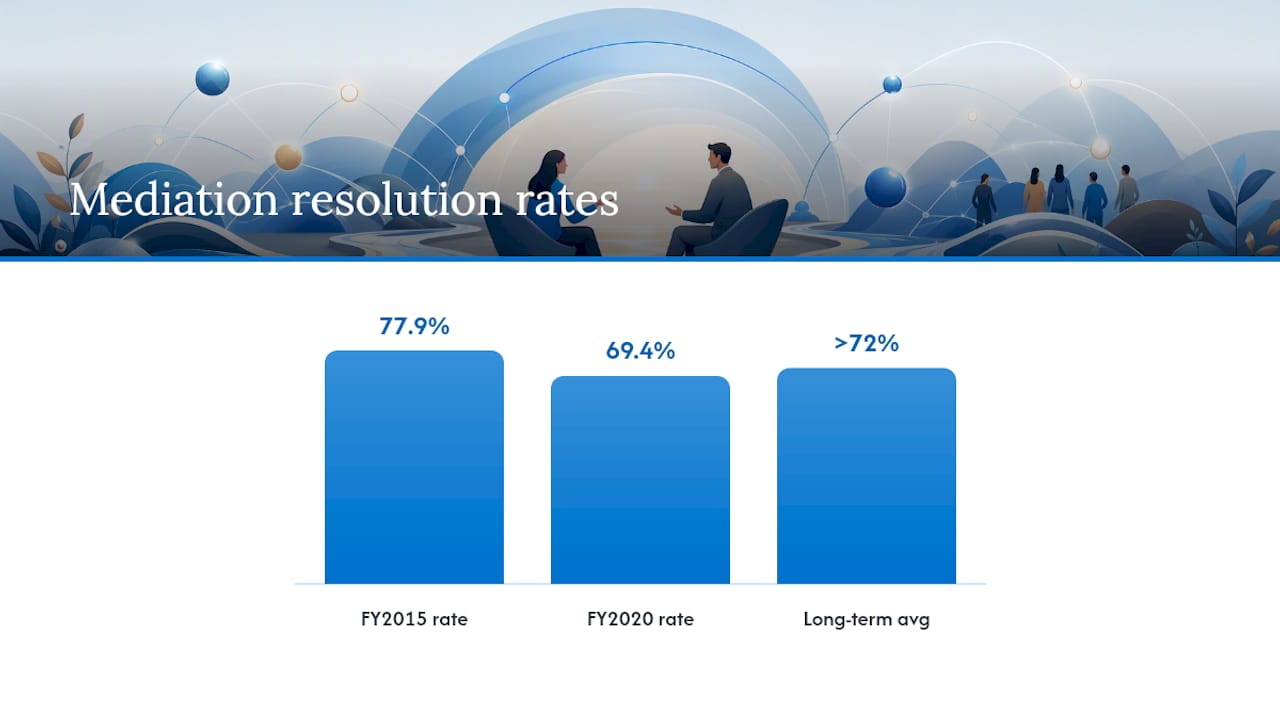
Cost is simple: mediation is free to both parties, no filing fee, no hourly rate for the mediator. Time is where the real advantage shows up. A typical session lasts 3 to 4 hours, and most cases wrap in that single sitting. Compare that to a full investigation, which the EEOC says can stretch past 10 months, and the appeal of mediation becomes obvious.
Resolution rates back that up. According to the EEOC’s own mediation statistics, the program resolved 69.4% of mediated charges in FY 2020 and as high as 77.9% in FY 2015, with a long-term average above 72%. Settlements aren’t always about money either; 13 to 20% of mediated cases close with non-monetary terms alone, things like a neutral reference, a schedule change, or a policy revision.
| Metric | Figure |
|---|---|
| Typical session length | 3–4 hours |
| Average closure time (FY 2020) | 147 days |
| Typical investigation length | 10+ months |
| Resolution rate range | 69.4%–77.9% |
| Non-monetary-only settlements | 13%–20% of cases |
Confidentiality Rules and What Can’t Be Used Later
Everything said in mediation stays out of the investigative file. If mediation fails, the investigator never sees what either side offered or admitted during the session. Mediator notes are typically discarded, and sessions aren’t transcribed or recorded.
- Offers and admissions made during mediation are confidential and generally inadmissible in the EEOC’s later investigation
- The mediator only reports whether the case resolved, not what was discussed
- Sensitive medical or personal information shared in caucus stays with the mediator, not the file
Pro Tip: If you’re worried about disclosing medical details tied to an accommodation claim, ask the mediator upfront how that information will be handled. You can also request accommodations, like a private caucus room or extra time, before the session begins.
If Mediation Fails: What Happens Next
A failed mediation isn’t a loss. It simply means the charge goes back into the queue for standard investigation, and your case starts wherever it would have if mediation had never happened.
- The charge is referred for formal investigation, with its usual timeline resuming
- Participating in mediation doesn’t waive any of your legal claims
- Nothing said during the session can be used against you in that investigation
- Preserve emails, performance reviews, and other documentation now, since mediation confidentiality doesn’t extend to your own external records
- Confirm the charge’s filing date and deadlines, and consult an employment attorney if the stakes are high enough to warrant one
How to Prepare for EEOC Mediation: A Practical Checklist
Preparation is where most outcomes actually get decided, long before anyone sits down at the table. A mediator can only work with what each side brings into the room.
- Write a concise mediation statement. Summarize the facts, the harm, and what you want in a page or two, not twenty.
- Document your damages. Lost wages, medical costs, or job search expenses need numbers attached, not estimates.
- List non-monetary priorities. A neutral reference, a policy change, or confidentiality terms can matter as much as a dollar figure.
- Set a realistic range. Know your walkaway number and your ideal outcome before you’re in the room, not while you’re in it.
- Decide who negotiates. If an attorney is present, agree beforehand on how much they’ll speak versus you.
- Review the settlement draft carefully. Confirm the language is enforceable and matches what was actually agreed, since EEOC settlement agreements function like any other binding contract.
Pro Tip: Bring your documents organized by category, timeline, damages, communications, rather than as a loose stack. Mediators move fast during caucuses, and organized evidence gets read; disorganized evidence gets skimmed. For help building that evidence file, see this guide on documenting workplace evidence.
When Mediation Works Best, and When It Doesn’t
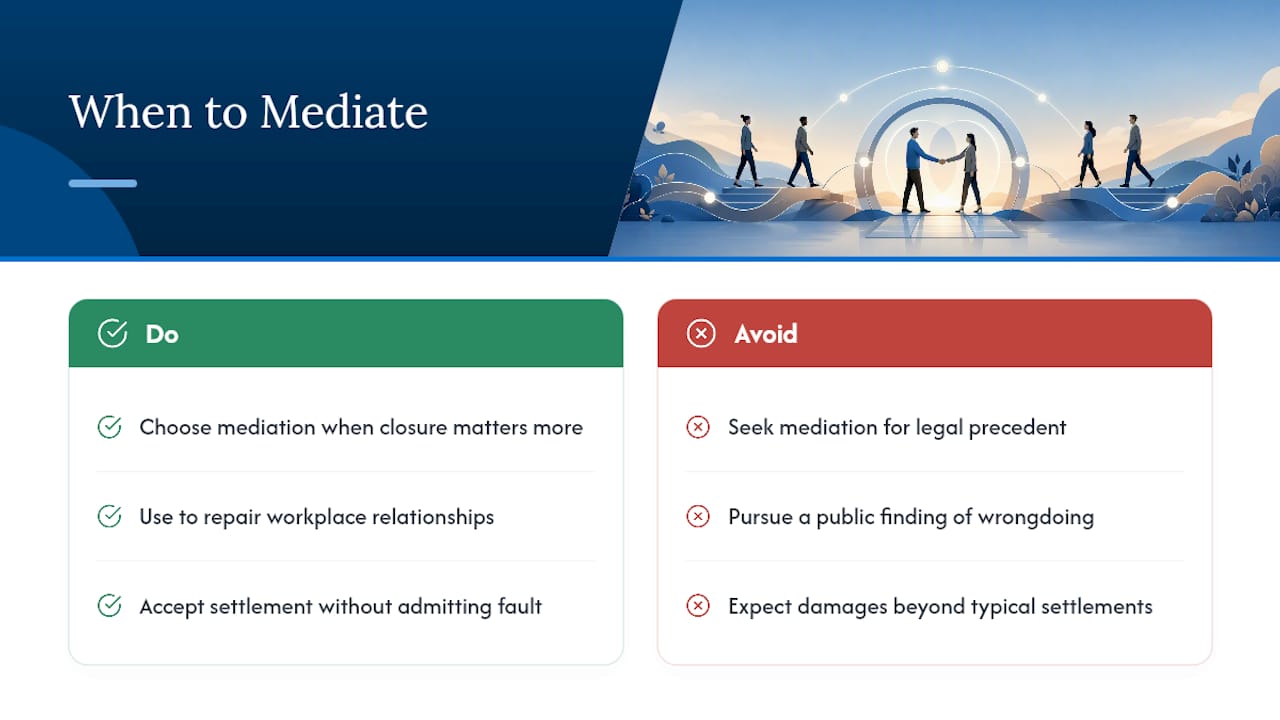
Mediation tends to work best when both sides want closure more than they want to be proven right. We’ve seen it repair working relationships that litigation would have permanently ended, largely because a settlement isn’t an admission of fault for either party.
That said, mediation isn’t the right fit for every case. If you’re seeking a legal precedent, a public finding of wrongdoing, or damages far beyond what a negotiated settlement typically offers, talk to an employment attorney before you agree to sit down.
— Max
Let Workplace Fairness Help You Get Ready
Walking into mediation without the right preparation puts you at a real disadvantage, and most free resources online stop short of the practical detail you actually need. Workplace Fairness fills that gap: plain-language guides on documenting evidence, understanding the discrimination complaint process, and knowing your rights before you ever step into a session.

If you’re still deciding whether mediation is the right path, or you want to understand your options before a session gets scheduled, start with Workplace Fairness’s guide for employees. It’s free, it’s built for people navigating exactly this situation, and it can point you toward an attorney if your case needs one beyond what mediation can resolve.
Recommended
- How to Document Workplace Harassment Evidence Correctly
- Workplace Discrimination Complaint Process: Your 2026 Guide
- Employment Tribunal Explained: What U.S. Employees Should Know
The post What to Expect From the EEOC Mediation Process appeared first on Workplace Fairness, Empower Workers.